When it comes to winter sports, humans have been quite innovative in finding more and more exciting, faster and even dangerous ways to move in deep snow. When cross-country skiing gets boring (which might happen quite quickly for someone who enjoys the more risky and adventurous sport of snow machine racing) it is time to go downhill skiing. When the ordinary downhill skiing gets boring, we incorporate ski-jumping and other tricks to make it a tad more exciting. And when even that is old news, it is time to take out your snowmobile and get racing.
What is it?
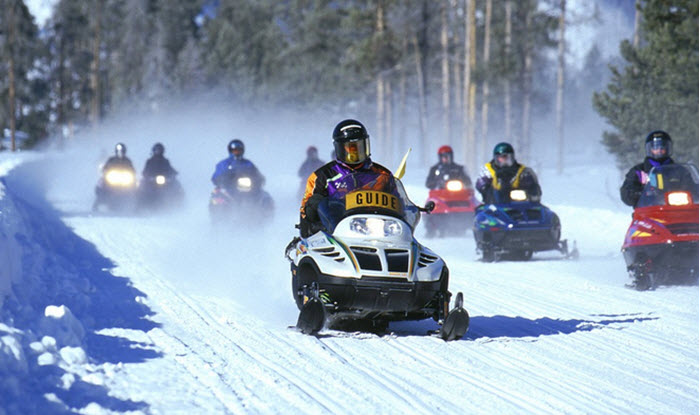
The creator of snow machines, or snowmobiles, most likely did not have huge international racing events in his mind when he came up with the idea. Instead, the idea for snow machines came from a need to find a way to travel in difficult winter conditions (mainly in deep snow) as quickly and effortlessly as possible. You don’t need tracks or a trail, so a snowmobile might come in very handy in certain weather conditions.
Because the machines were meant for travelling rather than racing, the older models often had two seats in them. However, since the racing part came about, the demand for one-seat snow machines started to increase so rapidly that, these days, only a tiny fraction of snow machines can accommodate two people.
Safety
Snow machine accidents are not rare; indeed, a certain level of recklessness has been part of the allure of these races from the beginning. However, nowadays, safety is taken more seriously than it used to be. You can minimize accidents by getting proper training in driving, by keeping your machine maintained and up to date, by learning the hand signals used by snowmobilers, by getting to know the limits of both yourself and the machine, by getting familiar with the area and terrain you are planning to visit and, of course, by following the rules of the race.
Races
Snow machine races have been around for 50 years. One of the most well-known races is the Iron Dog, held in Alaska, USA. It is more than 3000 km long, which also makes it the longest race there currently is. Another popular race is International 500, a huge annual event held in Michigan, USA, with an 800 km track. International 500 has been around since 1969. In addition to these two, there are plenty of other snow machine races going on around the world
Who is it for?
Snow machine racing is definitely a hobby for those who enjoy a touch of the fear of death while having fun. However, although it is important to understand the risks that come with the rush when snow machine racing, once the safety concerns have been taken care of, it can easily be one of the most breathtaking experiences of your life. An added bonus is that you get to enjoy some amazing scenery (woods, mountains, fields covered in glittering snow) as well as the speed and the adrenaline rush!