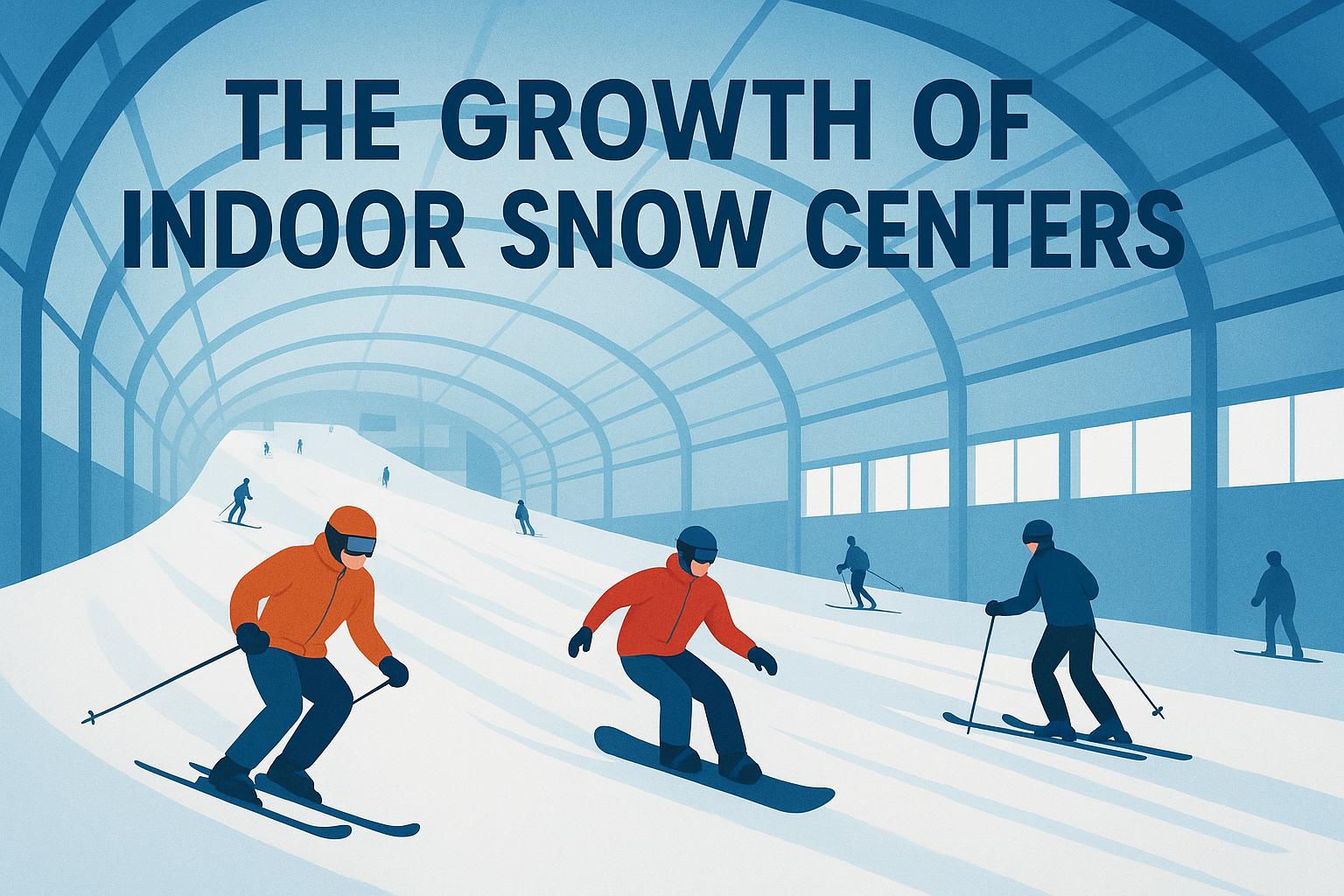
The Evolution of Indoor Snow Centers
The emergence of indoor snow centers marks a pivotal transformative approach to snow sports. These centers not only cater to enthusiasts but also invite casual visitors to partake in snow activities, regardless of the geographical and climatic restrictions of their locations. Spanning the globe, these venues reflect significant technological advancements over time, meeting the burgeoning demand for year-round snow sports and leisure activities.
Origins and Development
The inception of indoor snow centers can be traced back to the 1980s, beginning in Europe, where inconsistent winter weather often disrupted the plans of ski enthusiasts. Initially modest in scale, the early versions of these centers served as local solutions to the unpredictable nature of winter sports. As the years progressed, what started as small-scale innovations gradually transformed into cutting-edge arenas. These facilities came to offer a wide array of snow-related activities, expanding beyond mere skiing to include snowboarding, tubing, and even snow play areas for children.
The evolution of these centers was fundamentally driven by advancements in refrigeration technology. During this period, technology had already started to reshape numerous industries, and its impact on indoor snow centers was transformative. Improved refrigeration technology allowed these centers to provide authentic snow conditions, regardless of the location’s external climate. Consequently, real snow surfaces were consistently maintained, negating the influence of seasonal variability and ensuring year-round accessibility.
Technological Advancements
Technological strides have been instrumental in the expansive growth and enhancement of indoor snow centers. At the heart of these advancements are the sophisticated snowmaking machines that have revolutionized the way snow is produced. These machines have the capacity to generate snow under a range of temperature conditions, which is particularly beneficial for regions where warm climates would otherwise make such facilities infeasible. The versatility of these snowmaking systems ensures the creation and preservation of optimum snow conditions, tailored to the needs of each center.
Alongside snowmaking technology, advancements in climate control systems play a critical role. These systems regulate the ambient temperature and humidity within the centers, ensuring consistent snow quality. Efficient climate control is crucial not only for snow maintenance but also for the comfort and safety of the facility’s visitors. The integration of high-tech sensor systems monitors conditions in real-time, allowing for immediate adjustments and optimization of the snow surface and environment.
Despite the complexity involved in these systems, the operational efficiency they bring is remarkable. By minimizing energy consumption and maximizing system performance, these technologies contribute to making indoor snow centers sustainable and economically viable, making them attractive to investors worldwide.
Global Reach and Popularity
Initially concentrated in Europe, indoor snow centers have experienced significant geographical expansion since the late ’90s. Their spread across Asia, the Middle East, and North America over recent years highlights their increasing global appeal. Regions traditionally devoid of natural snowfall, such as the Middle East, have embraced the concept wholeheartedly. A prime example is Ski Dubai, situated in the United Arab Emirates. As one of the largest and most renowned indoor snow parks, it draws a diverse international audience, underscoring the appeal of these venues beyond local populations.
In regions like Asia, cultural shifts towards recreational sports and leisure have further fueled demand. An increasing middle class and a shift towards experiential activities have provided fertile ground for the expansion of indoor snow centers. The ability to offer consistent quality experiences irrespective of unpredictable or non-existent winter conditions has made these centers immensely popular.
Moreover, the introduction of competitive snow activities within these facilities has sparked local and regional interest, potentially becoming a stepping stone to worldwide participation. In the United States, and Canada, indoor snow centers serve as convenient locations for those seeking an urban complements to traditional outdoor resorts.
Social and Economic Impact
The establishment of indoor snow centers generates numerous social and economic advantages. Economically, such facilities are pivotal in driving tourism, especially in urban areas that lack traditional winter sports infrastructure. They generate a range of employment opportunities, spanning operations, hospitality, and management roles that contribute to local economies. Furthermore, these centers often spur ancillary businesses such as hotels, restaurants, and retail shops, enhancing their economic footprint.
Socially, indoor snow centers act as hubs for community engagement and physical activity. They provide a venue where people of all ages, from children to seniors, can participate in snow sports, thereby fostering a sense of community. This inclusive access helps in broadening the base of snow sports participants, encouraging diversity in the field. Additionally, with the presence of expert trainers, novices can learn and advance their skills in a controlled environment, ultimately cultivating a broader appreciation and participation in snow sports.
These centers also have a notable impact on professional sports. Many serve as year-round training grounds for athletes, offering consistent conditions that aren’t subjected to the variability of natural environments. This reliability gives athletes an edge, allowing them to focus solely on training without the distraction of weather unpredictability. As a result, indoor facilities contribute significantly to nurturing talent and enhancing performance in international competitions.
In conclusion, the rise and propagation of indoor snow centers underscore the growing demand for accessible winter sports across the globe. Through relentless technological innovation and strategic development, these centers continue to thrive. They provide diverse snow experiences while bridging the gap between geographical limitations and the desire for winter sports, thus opening up new avenues for recreational and professional engagement in the snow sports arena.