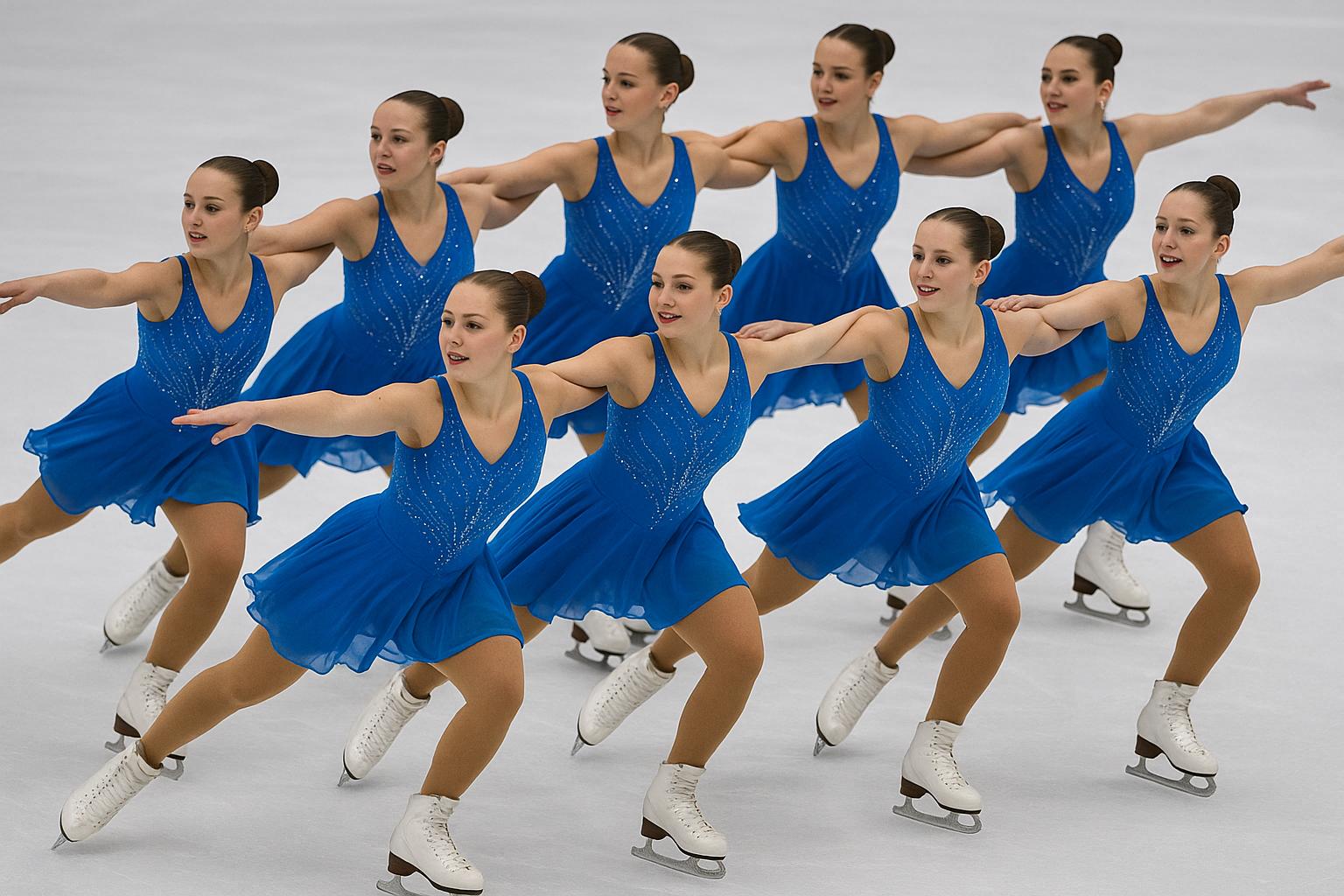
The Discipline of Synchronized Skating
Synchronized skating is a competitive team sport that blends the grace and artistry of figure skating with the rhythm and coordination of dance. In this dynamic discipline, a team consisting of 8 to 20 skaters collaborates to perform intricate routines on an ice rink. The skaters work together to execute formations and movements with precise synchronicity. Known popularly as “synchro,” the sport places a strong emphasis on precision, timing, and seamless teamwork, resulting in a visually captivating display for the audience.
History and Development
The roots of synchronized skating can be traced back to the United States during the early 1950s. Originally conceived as a medium for skaters to perform as a group in exhibitions, the sport slowly began to gain traction. It was not until 1976 that the first official competition was held, marking a pivotal moment in the sport’s evolution. Since that inaugural competition, synchronized skating has experienced substantial growth on an international scale. Its recognition was further bolstered when it was included in the International Skating Union’s (ISU) list of officially recognized disciplines.
Team Composition and Performance
A typical synchronized skating team consists of 16 skaters, although configurations may vary slightly with some teams having fewer members. The performances are crafted by choreographers who design intricate sequences of maneuvers. These sequences include but are not limited to formations such as pinwheels, intersections, lines, blocks, and circles. Each of these formations necessitates not only individual skill but also exceptional coordination and communication amongst team members. Performers must maintain both speed and control, a demanding task requiring intense practice and mutual understanding.
Scoring and Competitions
Competitions in synchronized skating are judged based on several criteria, including technical merit, difficulty of elements, and artistic impression. Judges scrutinize every aspect of a team’s performance, paying close attention to the precision in formations, the overall skating skills displayed by the athletes, and the creativity embedded in the choreography. Teams are classified into various levels, ranging from beginner categories to senior divisions, each with specific stipulations and requirements. As the sport has grown in sophistication, so too has the level of competitive spirit and excellence exhibited by teams at all levels.
Global Appeal and Expansion
In recent decades, the allure of synchronized skating has transcended geographic boundaries, resulting in a global expansion of the sport. It has particularly gained momentum in regions such as Europe, North America, and Asia. Each year, the ISU organizes the prestigious World Synchronized Skating Championships, which draws teams from all corners of the globe, eager to showcase their talents on an international stage. Amidst this expansion, there is a continuous push for synchronized skating to be recognized as an official event in the Winter Olympic Games, reflecting its growing significance and popularity.
For more detailed insights into the regulations governing synchronized skating as well as up-to-date information on events, you may explore the International Skating Union’s official website.
The Skills and Preparation Involved
Synchronized skating requires an array of skills that transcend basic skating proficiency. Team members must possess strong individual skating skills, including solid control, agility, and the ability to perform complex steps. Beyond these individual skills, skaters need to master group dynamics. They must have an acute awareness of spatial orientation, ensuring that every formation is executed with alignment and synchronicity. This requires dedicated practice, often involving hours of rehearsal to perfect each element of their routine.
Physical Conditioning
Physical conditioning plays an integral role in synchronized skating. Skaters must maintain peak physical fitness to handle the demands of their routines. This often includes cardiovascular training to build stamina, strength training to support the dynamic movements involved, and flexibility exercises to enhance the range of movement. A well-rounded fitness program is essential in ensuring each skater can perform under the strenuous conditions of competition.
Mental Preparation
Alongside physical preparation, mental readiness is crucial in synchronized skating. Skaters must cultivate focus and mental resilience, as the pressure of synchronized performance can be intense. Teams often engage in mental training exercises to enhance concentration, build confidence, and prepare for the high-stakes environment of competitive events. Mental preparation helps skaters maintain composure and execute their routines flawlessly even under pressure.
The Choreography and Creativity
The choreography in synchronized skating serves as the backbone of any performance. Choreographers work closely with teams to craft routines that not only meet technical requirements but also captivate audiences with originality and flair. Creative expression is highly valued, as teams seek to distinguish themselves with unique movements and thematic elements. This creativity is combined with technical skill to create performances that are both artistically and technically impressive.
Music and Theme Selection
Music and themes are selected carefully to enhance the storytelling aspect of a performance. The music choice must align with the team’s style and abilities, ensuring that every element of choreography complements the soundtrack. Themes offer an additional layer of interpretation, inviting audiences to engage with the performance on an emotional and intellectual level. The selection process is a collaborative effort, with teams working alongside choreographers to create a cohesive and compelling performance.
Future Perspectives
The future of synchronized skating is bright, with continued growth and development on the horizon. The push for Olympic inclusion remains strong, driven by stakeholders committed to raising the sport’s profile. As more countries develop their own synchronized skating programs, the level of competition continues to rise, pushing teams to innovate and strive for new heights of performance excellence. Furthermore, as audiences worldwide increasingly embrace the visual spectacle and discipline of synchronized skating, the sport will undoubtedly continue its trajectory towards greater global recognition and appreciation.