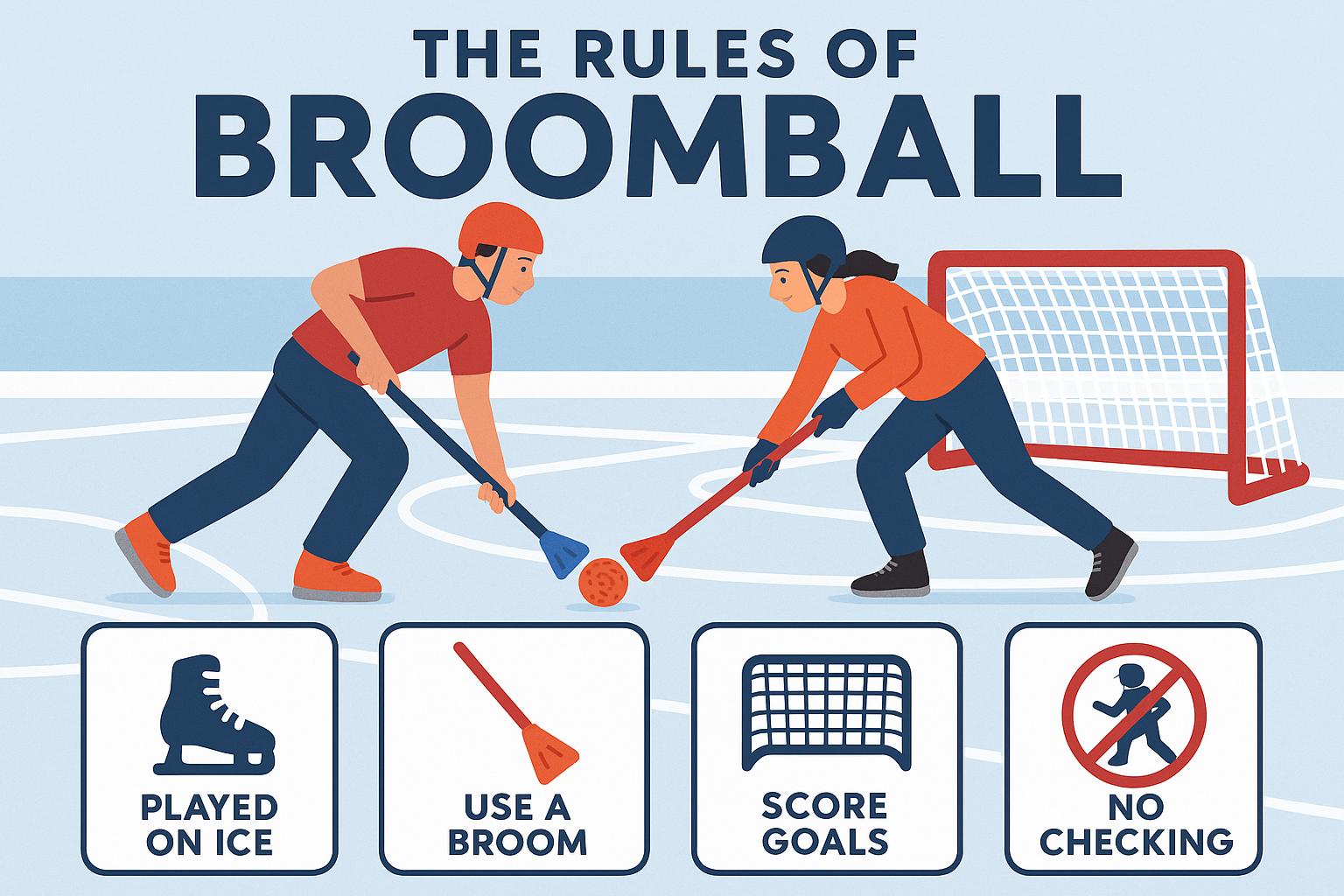
Introduction to Broomball
Broomball is an engaging team sport with a significant resemblance to ice hockey, designed for play on an ice rink. It involves players utilizing brooms and a ball in place of hockey sticks and a puck. The sport enjoys popularity predominantly in cold-climate regions, such as Canada, the United States, and various parts of Europe. Observing or playing broomball becomes more captivating when one gains an understanding of its rules and nature of play.
The Objective of the Game
The core aim in broomball is to outscore the opposing team. Players make attempts to direct the ball into their competitor’s net using brooms. Each team is composed of six players, consisting of five outfield players on the rink and one goalkeeper responsible for guarding the goal.
Equipment and Rink Setup
Broomball involves specific equipment, namely brooms, rubber-soled shoes, and a ball. The playing rink bears similarity in size to an ice hockey rink yet is often prepared with a thin water layer over the ice to minimize slipperiness. The goals mirror those used in ice hockey, and boards encircle the rink to complete the setup.
Playing Positions
A varied array of playing positions in broomball permits strategic balance and effectiveness:
- Goalkeeper: Tasked with defending the net, the goalkeeper aims to thwart the opposition’s attempts to score.
- Defenders: Responsible for safeguarding the defensive zone near their goal, these players assist the goalkeeper and act to prevent the ball from reaching the net.
- Forwards: As the prime attackers, forwards focus on breaching the opponent’s defenses to score.
- Center: Vital for facilitating play transitions from defense to offense, the center plays a supportive role to both forwards and defenders.
Game Duration and Winning
The structure of a standard broomball game comprises two halves, each extending between 15 to 20 minutes, which might vary according to league or tournament rules. In case of a tie at the close of regular play, solutions such as overtime or a sudden-death shootout may be employed, subject to specific league guidelines.
To further understand the dynamics of game duration, it’s important to note that pace and intensity can greatly influence gameplay. Teams often strategize on managing player stamina and sustaining momentum throughout the allotted game time. Substitution players need to remain ready for instant entry to exploit changes in play or to cover tired teammates, maintaining a high energy level crucial for success in both regular time and potential overtime scenarios.
Fouls and Penalties
Broomball, akin to numerous other sports, implements a rule system devised to promote fairness and safety. Common infractions include what is termed “high brooms,” where a player’s broom rises above waist height, as well as tripping and body checking. Such violations accrue penalties resulting in offenders serving time in the penalty box, conventionally ranging from two to five minutes, consequently leaving their squad with one less player on the rink.
The penalty system not only acts as a deterrent against overly aggressive play but also offers tactical opportunities. Teams must adeptly shift strategies to accommodate the temporary loss of a player via increased defensive coordination or focusing counter-attacks during power plays when the opponent is shorthanded.
Strategy and Tactics
Developing a successful strategy in broomball demands a comprehension of both personal player capabilities as well as team dynamics. Defensive teams must balance proactive aggression to reclaim possession with conservative guarding measures to protect the goal. Formations may vary depending on prevailing conditions, opponent behavior, and coaching decisions, emphasizing the importance of adaptability.
On the offensive end, player spacing and passing accuracy are critical. Teams usually employ a combination of short, quick passes to maneuver through opposing defenses effectively. Utilizing the edges of the rink for swift play alterations is a common tactic to bewilder defenders, creating scoring opportunities from unexpected angles.
Conclusion
Broomball represents a dynamic and accessible sport suitable for enthusiasts across varying skill levels. Thus, comprehending its basic elements and rules can greatly enhance both participation and spectating experiences. With continued interest and exploration, such as through resources available at local league websites or sports venues, individuals gain subsequent opportunities to engage with the sport, whether by witnessing events firsthand or actively participating on the ice.